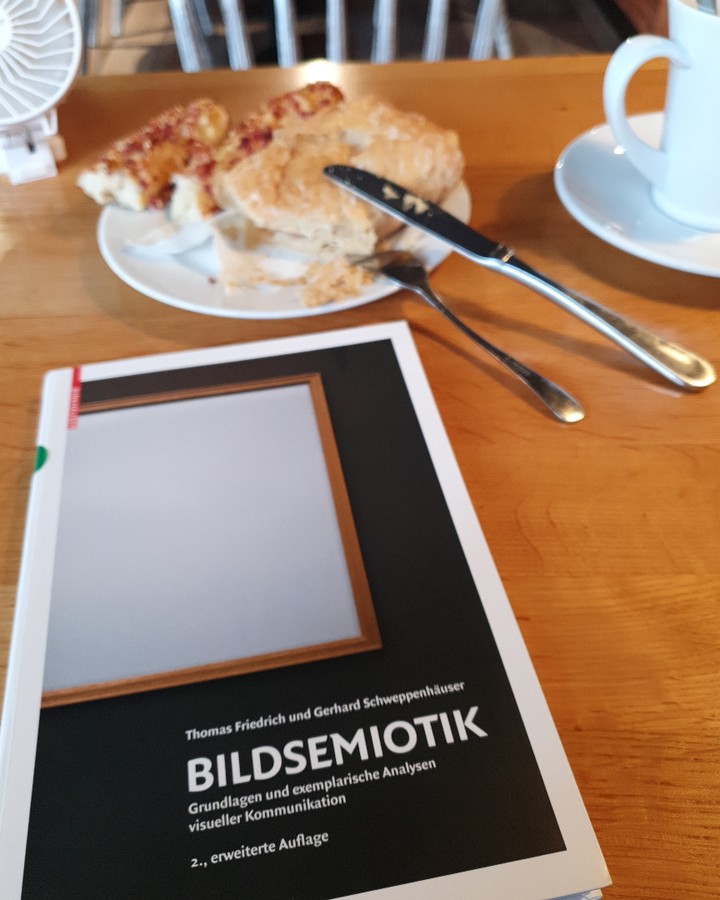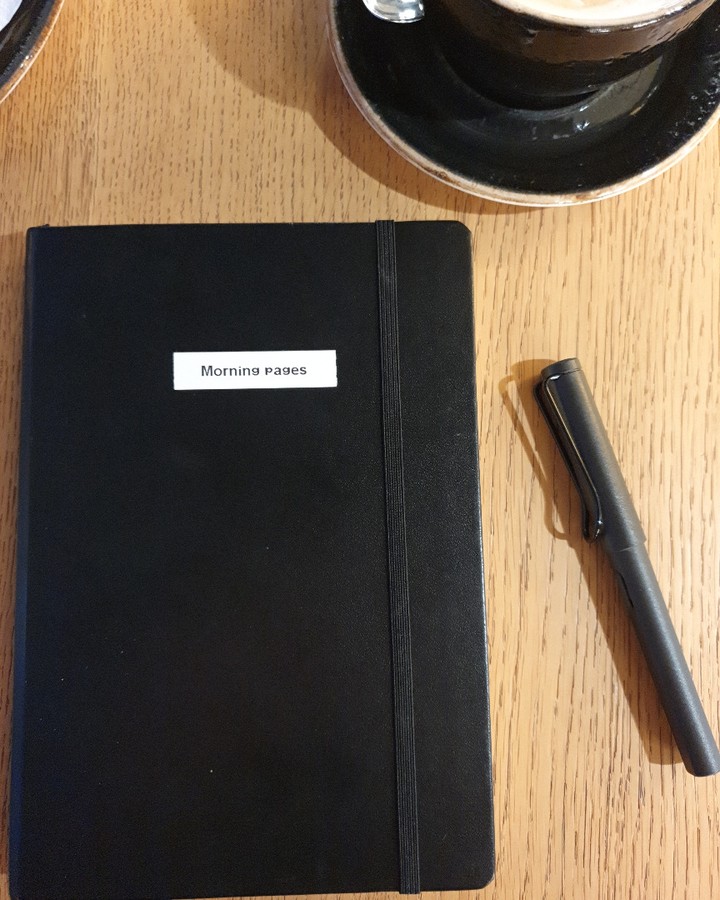
• Signed up for the Art Nest Academy for their free course, just to get back into my own system, and to see how and where homework overlaps between their and my stuff.

    People spend so much time on showing off their finished work, that the whole scene has this Wunderkind air: everyone practiced, but from what you see, you would never guess.

    Don’t trust the narrative. When I get around to reading and studying my books about talent, I will let you know what that is.

    For now, I will stick to Flow, after Czíkszentmihályi, rather than learning about talent, though.

    Also, having invested in heavy sunblocking curtains was a good idea.

    Source: My after‑hours blog on Tumblr Code & Canvas

  • codeandcanvas:

    I have been kicking around this idea during my graphic design study for a while, since I am nothing but ambitious (and I have a few fond memories of this working before, to my benefit): to actually put in the workload for each topic related to graphic design and applied arts.

    Hi. I am Mario, and I have a bachelor’s degree in graphic design, which, to you, should mean that I passed every test. And, for the sake of this project, it is best to assume that I barely made the cut each time. It is also best to assume that this applies to everyone with a degree, since scoring high grades is not what makes you pass.

    A passing grade does.

    So, right now, I am at the point where I am ready to actually understand graphic design (and my second interest: applied arts), and I was looking for a system, a quantifiable system of work put in, translating into workload, per week, per topic.

    And that system is called ECTS: the European Credit Transfer System

    Each credit in this system translates to roughly 25 hours of workload put in. A topic or lecture is worth 3 credits? That means an investment of 75 hours. 5 credits translate to 125 hours.

    You can use this for yourself, independent of whether or not you actually study a course someplace.

    So, you can go ahead and look online for a course giving you information about its lectures, topics, ECTS credits, and workload, and create your own schedule, at your own pace:

    45 minutes every other day will very quickly beat the eight‑hour long crunches once each week, since a good schedule is about allowing consistency to take hold. I am not an educator (yet, afaik), but from what I remember the issue with these crunch sessions is that the session which came before is already barely present, its learnings vague, my progress a memory.

    So, let us say that you have found a course telling you about its lectures and classes, and how they are set up. Ideally, with information about recommended literature. If you are a polyglot (and who isn’t these days?) you can again enjoy having an edge, for obvious reasons I don’t need to get into.
    You have been shopping around colleges and universities around the EU, and you have found out that which interests you most, is figure drawing.

    And, for the sake of this example, I’ll say that there are three figure drawing classes, called “figure drawing I”, “figure drawing II”, and “figure drawing III” respectively, valued at 5 each. To you, this means a workload of 375 hours for your absolute foundations in figure drawing (5 × 3 × 25).

    Of course, to do this, you also need courses in anatomy (75 hours?), drawing (75 plus 75 hours maybe?), and painting (375 hours?) to have those foundations upon which you can build your figure drawing.

    Provided you build smart (and frequent a good library in the largest city in your area), we are looking at a workload of around 975 hours.

    These are study hours: learning, reading, doing.

    What this translates to in terms of doing 45 minutes of work every other day, is that to get those (I assume solid) foundations in figure drawing, assuming you work 3 hours per week in total, will take you 375 weeks.

    Or 6.25 years.

    This seems slow. And it is. It should be. But the outcome will be the same: a passing grade in figure drawing. For only 45 minutes of work every other day (not counting your trips to the library each time you need a new book to study from).

    Of course, we can look at that the other way as well: if that is the workload anyhow, why not get credits for it? They, at the very least, are proof of what you studied. And because, in our example, we just accumulated around 45 ECTS credits, you might as well have them validated and go study for real, feel me?

    BTW, my graphic design study was 180 of those credits in total, so you just did a quarter of the points needed for completing a bachelor’s degree.

    Huh. This was insightful. For both of us, I hope.

    And I am done with the web stuff, all of it:

    Website works

    Doodads for the website work

    All socials to be kept up to date are in place

    everything is linked up

    Back to study. So let me wipe that table clean and just get back into it. Ad astra!

    Source: My after‑hours blog on Tumblr Code & Canvas

  • @mariobreskic:

    Cool. Right. Back to study. asca

    Source: My Threads Account Mario Breskic

  • @mariobreskic 🔁:

    Actually bookmarking this reply thread asca

    Source: My Threads Account Mario Breskic

  • People sitting on their likes like they will depreceate in value.
    Is it the giving coins to beggars mentality? I am almost sure.
    Or is it about giving a vote to something?

    Me? I give likes left and right, there are bookmarks, hearts, and stars flying out of my finger tips!

    But on something like artstationhq or Cara, I noticed I am the same, sitting on my likes, wanting to send a message instead of vibes: which work by this artist looks like the best work? asca

    And I think I get it:

    Source: My Threads Account Mario Breskic

  • And I wrote a short tutorial in German how I ended up doing it #buildinpublic #asca
    Ich wollte Statusupdates machen können

    Source: My Twitter Account Mario Breskic

  • There have been a few notes from a certain cartoon from Japan playing in my head while catching them all.

    For now, I am done with my websites. I even switched my main website from Times New Roman over to Georgia. Should I find the time, I will study Willberg and Forssman’s Lesetypografie to find a better solution further down the line.

    But for now, I am content with having put in the work for six days.

    And I will rest today, too. See you soon, my friends.

    And then we will get right into teaching ourselves art and design forever. Hundreds of hours of intense work ahead.

    But first, rest.

    Source: My after‑hours blog on Tumblr Code & Canvas

  • For clarity what is being done where by @adobe:

    https://ift.tt/QhExt9e and
    https://ift.tt/K4v5moc.

    tl;dr no, @adobe doesn’t upload your local files and train their AI on it. Yes, they have access to everything you upload to their Cloud storage. Yes, they check and process what you’ve uploaded. Yes, they use whatever you upload to train their AI. Yes all of Generative content, too. asca

    Source: My Threads Account Mario Breskic

  • Everything gains from its own identity. Everything loses its identity by trying to be anything other. #asca

    Source: My Twitter Account Mario Breskic

  • I pulled this up Art as technology by @pocobelli to update what I know about #art, #artists, and I think #AIart #genart? That piece by @neymrqz at timestamp 554 seconds reminds me of this #Kandinsky quote #asca

    Source: My Twitter Account Mario Breskic